Sidewalks, Walkways & Flatwork
Connect your property with safe, attractive concrete walkways, sidewalks, and flatwork installations.
Walkways That Connect Your Property
Good walkways do more than get you from point A to point B. They improve safety by providing stable, level paths that don't become muddy or slippery. They protect your landscaping by keeping foot traffic where it belongs. And they enhance your property's appearance by creating clean, defined paths that complement your home and yard.
We install concrete walkways for homes and businesses throughout Lathrop and San Joaquin County. Whether you need a simple path from your driveway to your front door or an elaborate walkway system connecting multiple areas of your property, we design and build paths that are both functional and attractive.
Concrete is the ideal material for walkways because it handles constant foot traffic without breaking down. Unlike gravel that scatters or pavers that shift and settle, concrete walkways stay level and stable for decades. They're also accessible for wheelchairs, strollers, and anyone who has difficulty with uneven surfaces.
Types of Flatwork We Install
Flatwork is concrete work that creates level surfaces. This includes walkways, sidewalks, and various other applications around residential and commercial properties.
Common Flatwork Projects
- Front walkways from the street or driveway to your entrance
- Backyard paths connecting patios, gardens, and outbuildings
- Sidewalks along property lines or street frontage
- Concrete pads for trash enclosures, generators, and equipment
- ADA-compliant ramps and accessible pathways
- Courtyard and garden walkways with decorative finishes
Each type of flatwork has specific requirements for width, thickness, and slope. Sidewalks need different specifications than decorative garden paths. Equipment pads require heavier construction than residential walkways. We size and engineer each project appropriately for its intended use.
Width matters too. Main walkways should be at least 3 to 4 feet wide so two people can walk side by side comfortably. Side paths can be narrower, around 2 to 3 feet. We'll recommend appropriate dimensions based on how you'll use each path and the space available.
Design and Finish Options
Walkways and flatwork don't have to be plain concrete. You have options to create paths that enhance your property's appearance while maintaining durability and safety.
Customizing Your Walkway
Functional Finishes: A standard broom finish provides good traction and works well for most applications. It's practical, affordable, and easy to maintain. For a smoother look on covered walkways, we can use a trowel finish, though it may be slippery when wet.
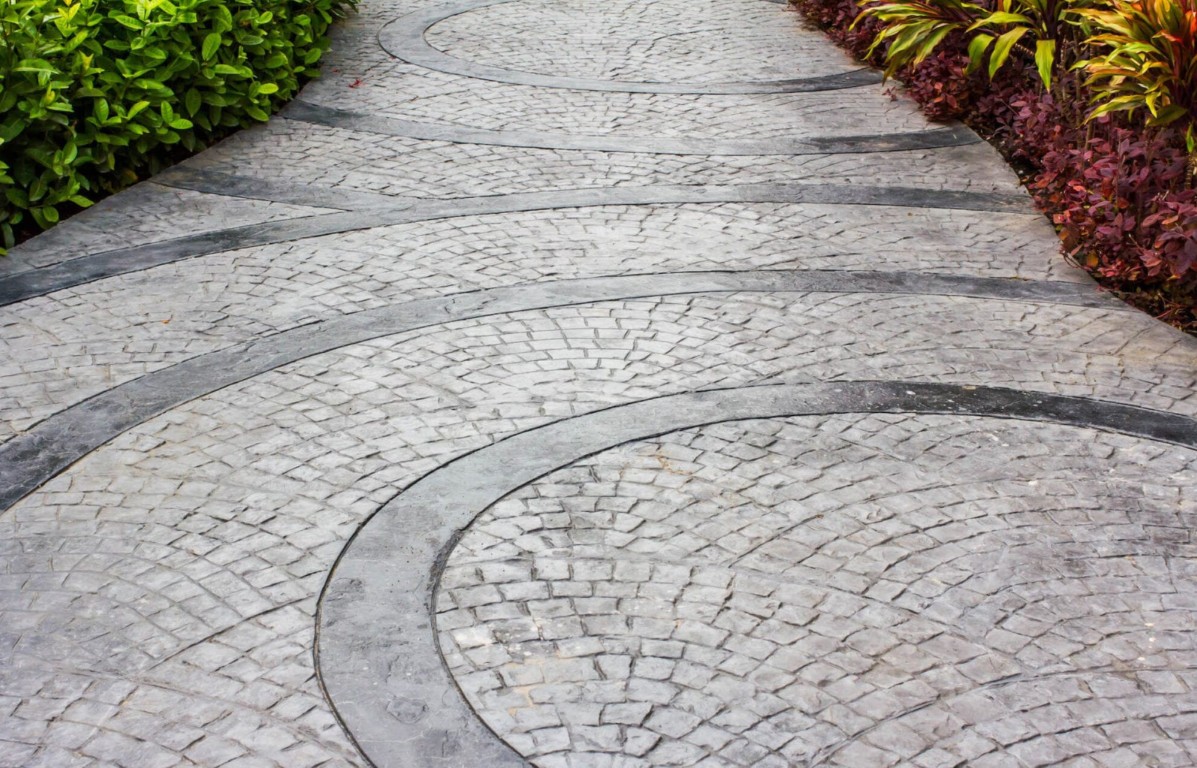
Decorative Options: Stamped concrete creates the look of brick, stone, or tile in patterns that complement your home's style. Exposed aggregate reveals natural stones in the concrete for texture and visual interest. Both options work great for front walkways and areas where you want something special. Learn more about stamped and decorative concrete finishes.
Borders and Accents: We can add colored borders, saw-cut patterns, or contrasting bands to break up long stretches of walkway. These details add visual interest without significantly increasing cost.
Curves and Shapes: Walkways don't have to be straight lines. Gentle curves create a more natural, flowing appearance and can help navigate around landscaping or follow the natural contours of your property.
We'll discuss your options and help you choose finishes that fit your style and budget. Even basic walkways can look great with the right design approach.
Frequently Asked Questions About Walkways
How thick should a concrete walkway be?
Most residential walkways are 4 inches thick, which is adequate for foot traffic and occasional light equipment like wheelbarrows or lawn mowers. If you expect heavier use or wheeled traffic, 5 to 6 inches provides extra durability. Commercial sidewalks often require 6 inches to handle higher traffic volumes. The thickness also depends on soil conditions and base preparation. We'll recommend the right thickness based on your specific situation and local code requirements.
Do you need to remove grass or soil before installing a walkway?
Yes, proper walkway installation requires excavating the path area and removing grass, roots, and organic material. We typically dig down 6 to 8 inches below the final surface level. This allows room for a compacted base layer (usually 2 to 4 inches of gravel or crushed rock) and the concrete itself. The base layer is critical because it prevents settling and provides drainage. Skipping this step or pouring concrete directly on grass leads to cracking and settling problems within a few years. We do the excavation work as part of the installation process.
Can you match a new walkway to my existing patio or driveway?
We can match the finish and style of new walkways to existing concrete, though there will be some color difference since new concrete looks different from aged concrete. For basic finishes like broom texture, matching is straightforward. For stamped or decorative concrete, we use the same patterns and colors to create a cohesive look. Over time, as the new concrete weathers, the color difference becomes less noticeable. If perfect color matching is important, you might consider adding a decorative finish or stain to both the new and existing concrete to create a unified appearance.
Connect Your Property With Quality Walkways
From simple paths to elaborate walkway systems, we install durable concrete flatwork throughout the Lathrop area. Whether you're connecting your new patio to the rest of your yard or installing ADA-compliant ramps and accessible paths, we handle all types of flatwork projects.
Looking for more than basic concrete? We offer complete residential concrete services including patios, driveways, and decorative installations.